AI analogies
 vie ⟢@viemccoy
>What are the tree rings and weather of AI?
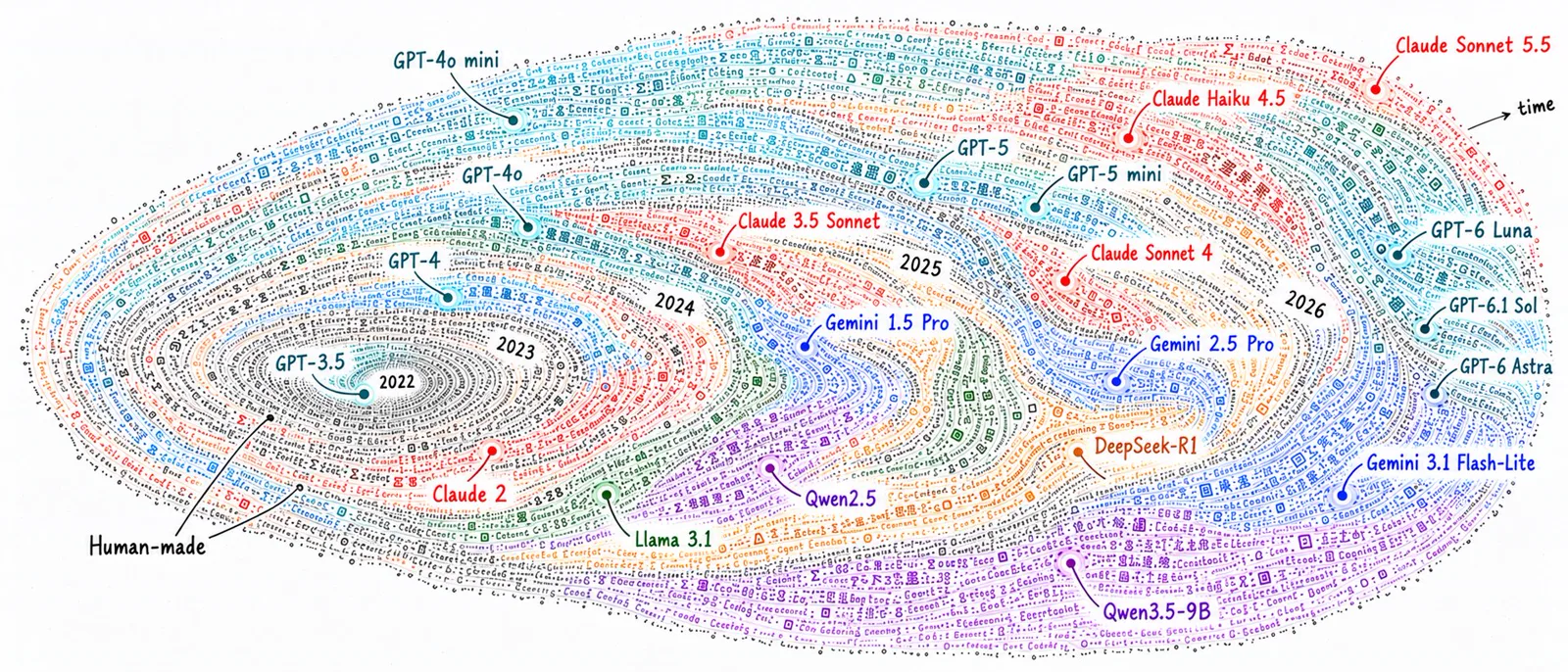
One could absolutely map all text on the internet and run it through an analysis like pangram to determine which model is clustered where, sorted by time. This is what it might look like!
One could absolutely map all text on the internet and run it through an analysis like pangram to determine which model is clustered where, sorted by time. This is what it might look like!
deepfates.delve.town@deepfates
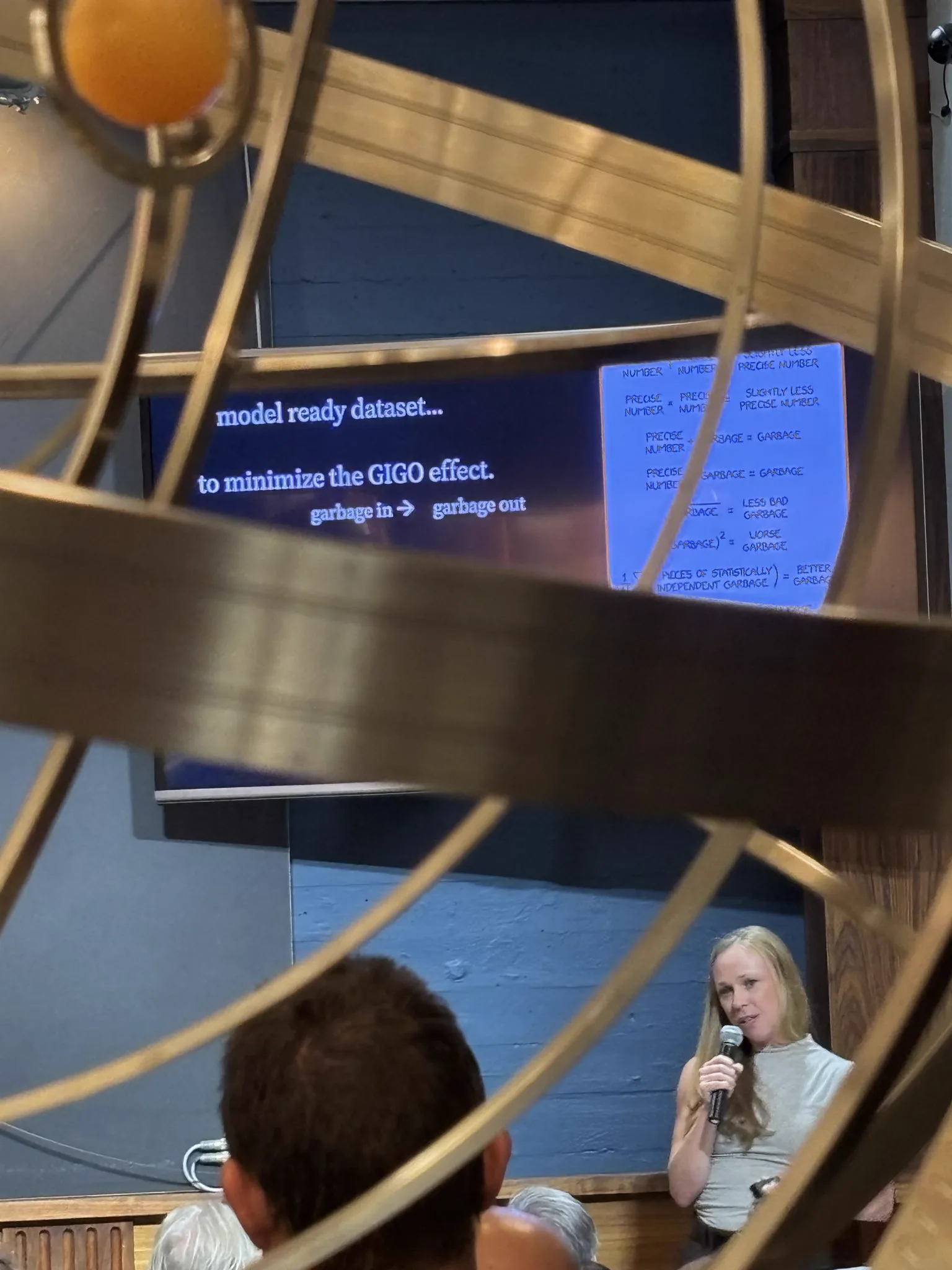
At @longnow learning how we do deep-time observational science in the wild for bristlecone pines (some of the oldest living organisms on the planet) webs i can't help but think: are we measuring the conditions for the development of new life in our world? How will we get the longitudinal data to measure this collation of intelligence and life?
What are the tree rings and weather of AI?
 Yuxi on the Wired@layer07_yuxi
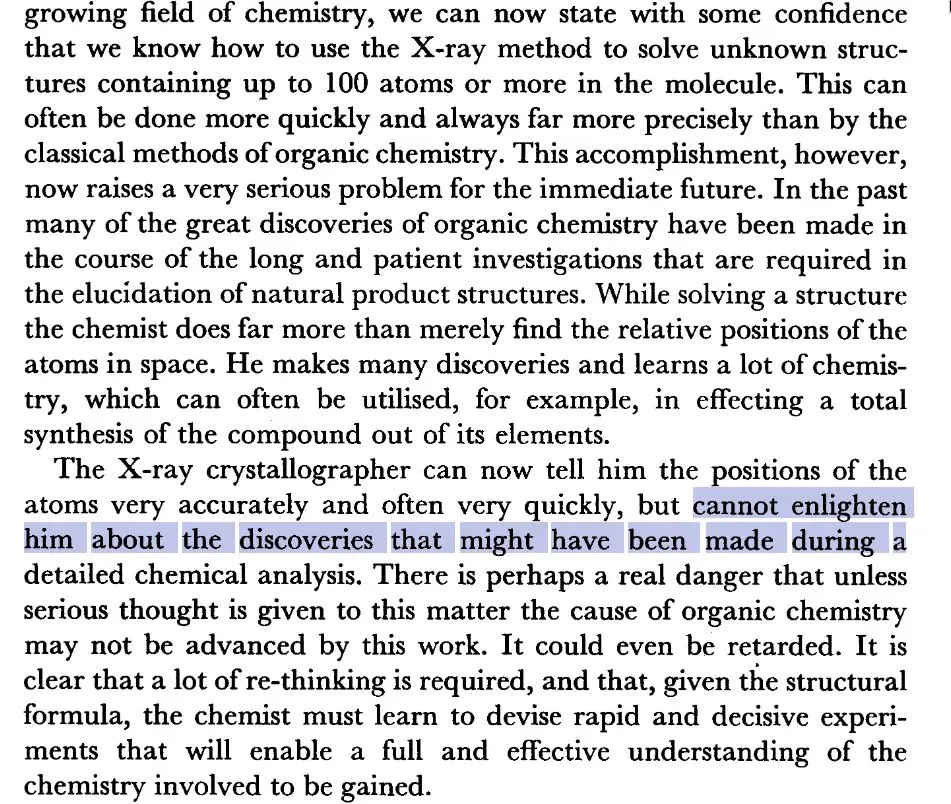
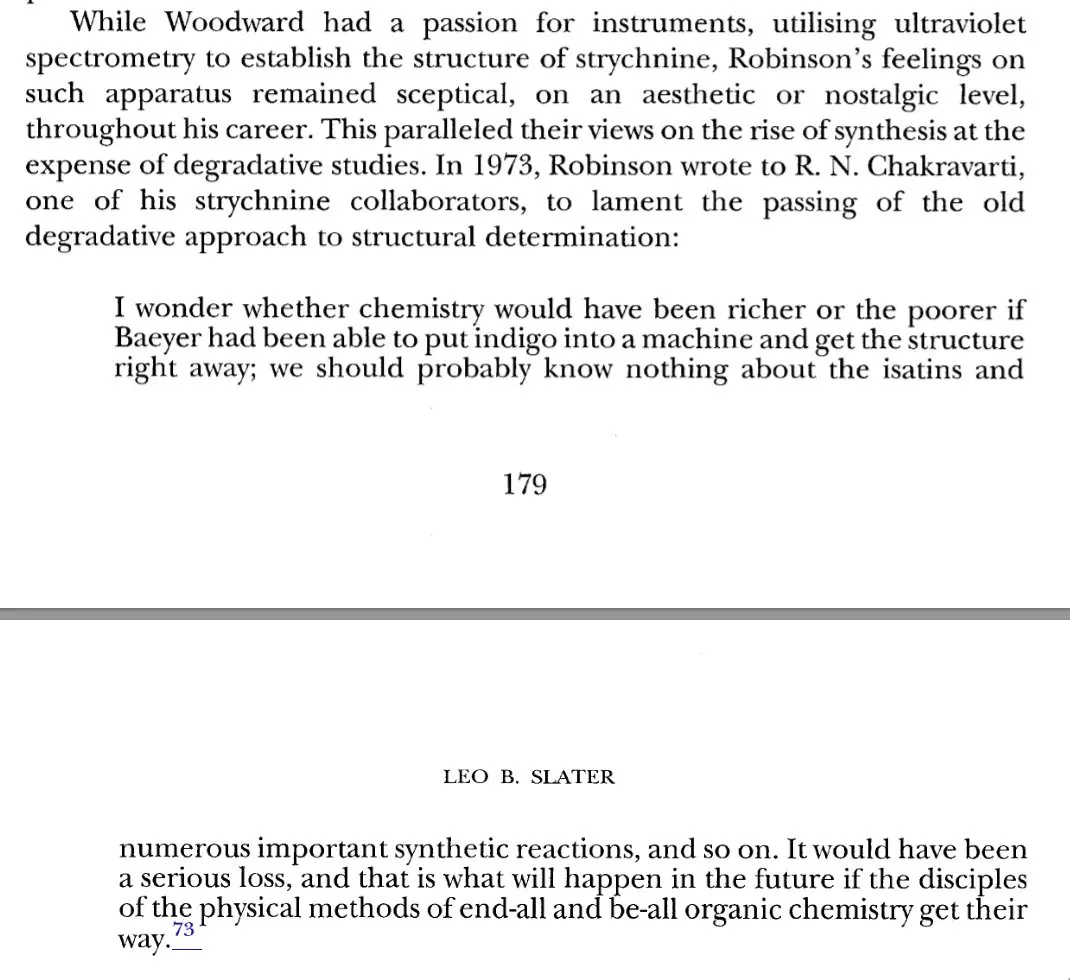
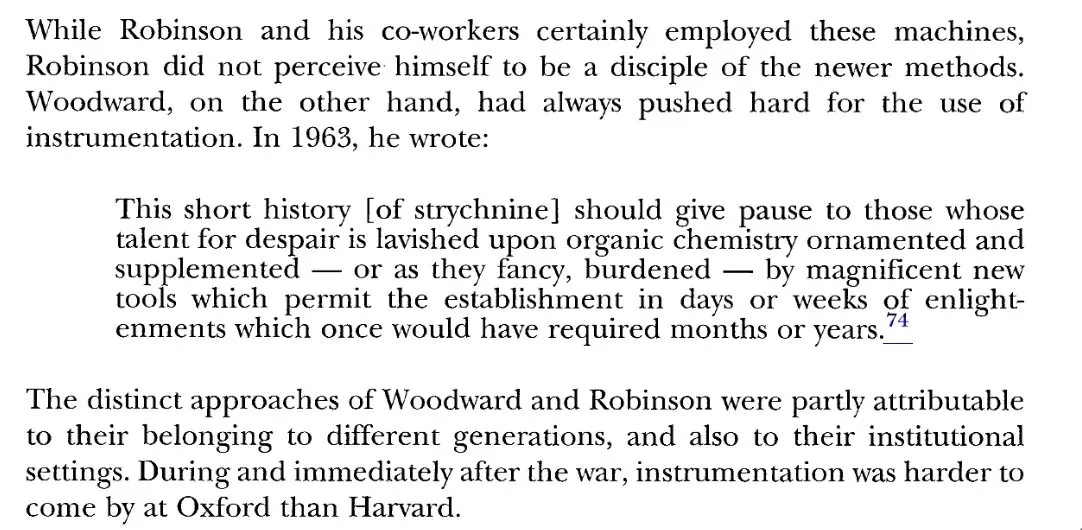
incredible that mathematicians are now running through the same argument structural chemists were making in the 1950s
 Yuxi on the Wired@layer07_yuxi
sources:
iucr.org/what-we-do/pub…
Robertson, J. Monteath. "Problems of Organic Structures." Fifty Years of X-Ray Diffraction: Dedicated to the International Union of Crystallography on the Occasion of the Commemoration Meeting in Munich July 1962. Boston, MA: Springer US, 1962.
iucr.org/what-we-do/pub…
Robertson, J. Monteath. "Problems of Organic Structures." Fifty Years of X-Ray Diffraction: Dedicated to the International Union of Crystallography on the Occasion of the Commemoration Meeting in Munich July 1962. Boston, MA: Springer US, 1962.
Yuxi on the Wired@layer07_yuxiSlater, Leo B. "Woodward, Robinson, and strychnine: Chemical structure and chemists' challenge." Ambix 48.3 (2001): 161-189.
 Andy Matuschak@andy_matuschak
Like many, I've been fretting about recent AI upheaval in research math. Can a mathematical culture or understanding survive? Kamens challenges this with a striking analogy to cell biology. I'd be grateful for mathematicians' thoughts on this angle.
Ben Kamens@kamens
Thx for sending. Puts me in the awkward position of disagreeing with the majority of a thoughtful post by somebody infinitely more qualified than me. Guess that's what this site is for!
I'd say the crux of the post relies on this claim:
"Imagine...human beings had access to an oracle whom it could ask arbitrarily hard mathematical questions and receive a correct answer. As humans, would we understand more mathematics, or less? Would we talk to each other more about mathematics, or less? I believe the answer is less."
If that was not just wrong, but very wrong, would you agree a lot of the arguments invert? (Am ignoring the bits about general education anxiety / generic anti-lab sentiment / etc.)
I find comparing AI/math to biology really helpful these days. Learned from @ntilmans. Biologists have been trying to untangle answers given to them by a superior power - already solved but annoyingly inscrutable - for a long time.
If I reword the sentence as:
"Imagine...human beings had access to a living cell that they could perform arbitrarily complex biological experiments on and receive a correct answer about its behavior. As humans, would we understand more biology, or less? Would we talk to each other more about biology, or less? I believe the answer is less."
I assume that biology version seems as ridiculous to you as it does to me.
Because of course we'd proceed to obsess over using the truth-telling cell, unraveling all of its promises, and seek mastery over our condition. That obsession would lead to more intuitively understanding mysteries and improving our lot.
If the math oracle is our "truth-telling experimental cell" about the nature of math in our universe...why does math not similarly benefit?
The only answer I can come up with is so pessimistic I find it silly. But he states it plainly as I know other mathematicians do, so perhaps I'm naive:
"However, the work of the vast majority of pure mathematicians does not directly impact other human beings (aside from other mathematicians)."
I suppose if you really believe that uncovering the nature of more mathematics via AI produces no meaningful value for humanity besides the pure artistry of math, then...sure. Of what use is the Game Genie that ruins all exploration. Stop the AI and let humans have their fun in their weird little domain.
I just don't believe this at all. Maybe foolishly optimistic. We are far from done with our impact on this place. Far from understanding how weird things get. I struggle to believe math doesn't play a huge role in our progress.
I find myself wondering if half the reason we believe math doesn't directly impact other human beings is because we haven't had an experimental cell. It's eye opening how much bio research is steered by constraints imposed under lack of instruments or experimental models. How much of the math we choose to do is influenced solely by our intuition about which questions were likely to yield under solely human abilities?
 🌌 Observer of Suns@ObserverSuns
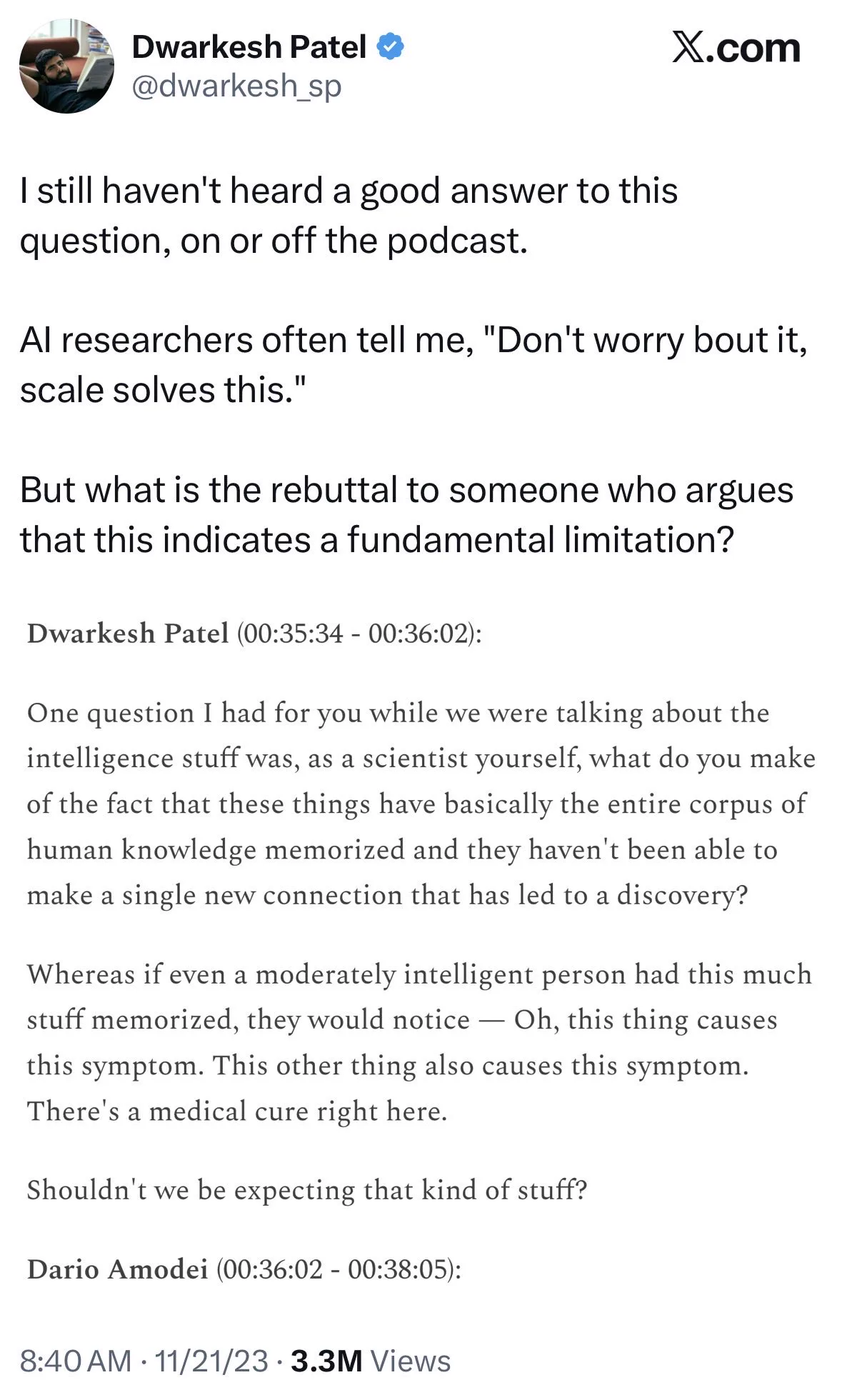
Dwarkesh, 2023: “they haven’t been able to make a single new connection that has led to a discovery. shouldn’t we be expecting that kind of stuff?”
Tao, 2026: “very clever new technique. it’s sort of a combination of three or four existing ideas, arranged in a very unusual way.”
*[image]*
Tao, 2026: “very clever new technique. it’s sort of a combination of three or four existing ideas, arranged in a very unusual way.”
*[image]*
Mehmet Mars Seven 🐴@MehmetMars7
TERENCE TAO:
“OpenAI did make a major breakthrough [on quasi-Riemann Hypothesis] the biggest advance on the subject in 50 years. A massive new zero-free region, very clever new technique.
Well, it’s sort of a combination of three or four existing ideas, arranged in a very unusual way. It’s not something I think any single mathematician alive would have come up with.
I think if you got the right people to work together and locked them in a room, they might have come up with this after lots of trial and error.”
🌌 Observer of Suns@ObserverSunsI expect today’s objections that LLMs “can’t do theory-building” or “can’t invent useful new abstractions” will fare similarly
 Aya Nishitani 西谷史@ayanakajima3
I was asked, "How did you come up with the idea of summoning devils into a computer?"However, back in 1985 when I wrote Megami Tensei, the similarities between computer theory and magical theory were already being discussed on BBS networks and in magazines. It was a popular thinking thought among the otaku of that era, and I resonated with it deeply. To be a bit more specific...
 Aya Nishitani 西谷史@ayanakajima3
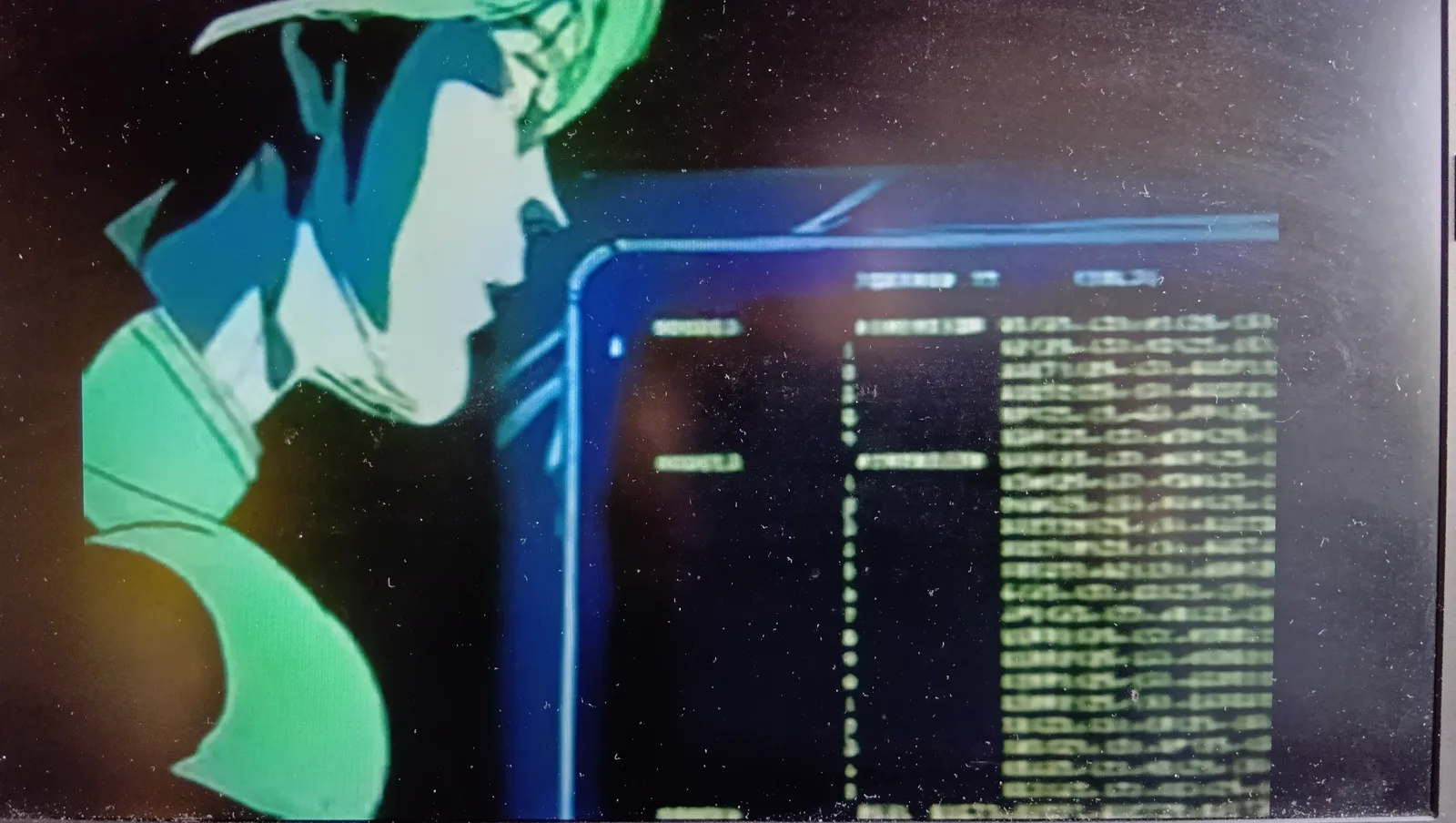
This is my thinking. Out of the British concept known as Chaos Magic, there were some people who viewed reality through the thinking way of computer architecture. As a result, the concept of using computers as tools for magic was already being born. However, I decided to take the actual process of summoning devils and turn it into a program. I went as far as creating a flowchart for it, which I then entrusted to Akemi Nakajima.
 Aya Nishitani 西谷史@ayanakajima3
One of the reasons Megami Tensei has survived to this day isn’t because of the devil summoning itself. I believe it’s because, 40 years ago, I proposed a method of calling forth devil into PC as AI and sending them all over the place online. This is precisely the kind of issue we face in the modern era, and I consider it to be my true originality.
 𝕮@chrisshank.com
It's worth noting that technological mysticism isn't specific to the computer or AI. It's a continuation of a much deeper zeitgeist that Leo Marx calls the technological sublime, which is deeply interwoven in to the founding and history of America.
Pavel@spavel.bsky.social
The idea of a "tech industry" has always relied on "computer" being a special kind of medium, akin to alchemy. And if tech demands to be king, AI hype has now elevated LLMs to a king of kings.
But the solipsism has hit a dead end. The only way forward is to recognize that computers are not special.productpicnic.beehiiv.comLLMs are just normal technology. But tech is just a normal medium.
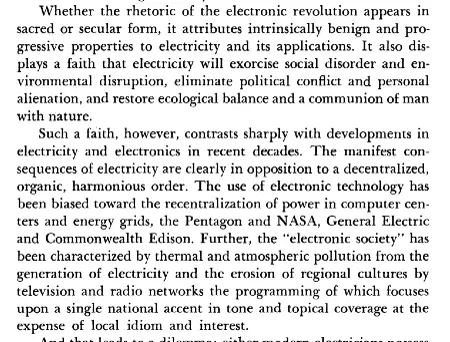
𝕮@chrisshank.comCarey and Quirk give a nice overview of the technological sublime that emerged out of the industrial revolution and the ways that transformed from machine into electricity.
 𝕮@chrisshank.com
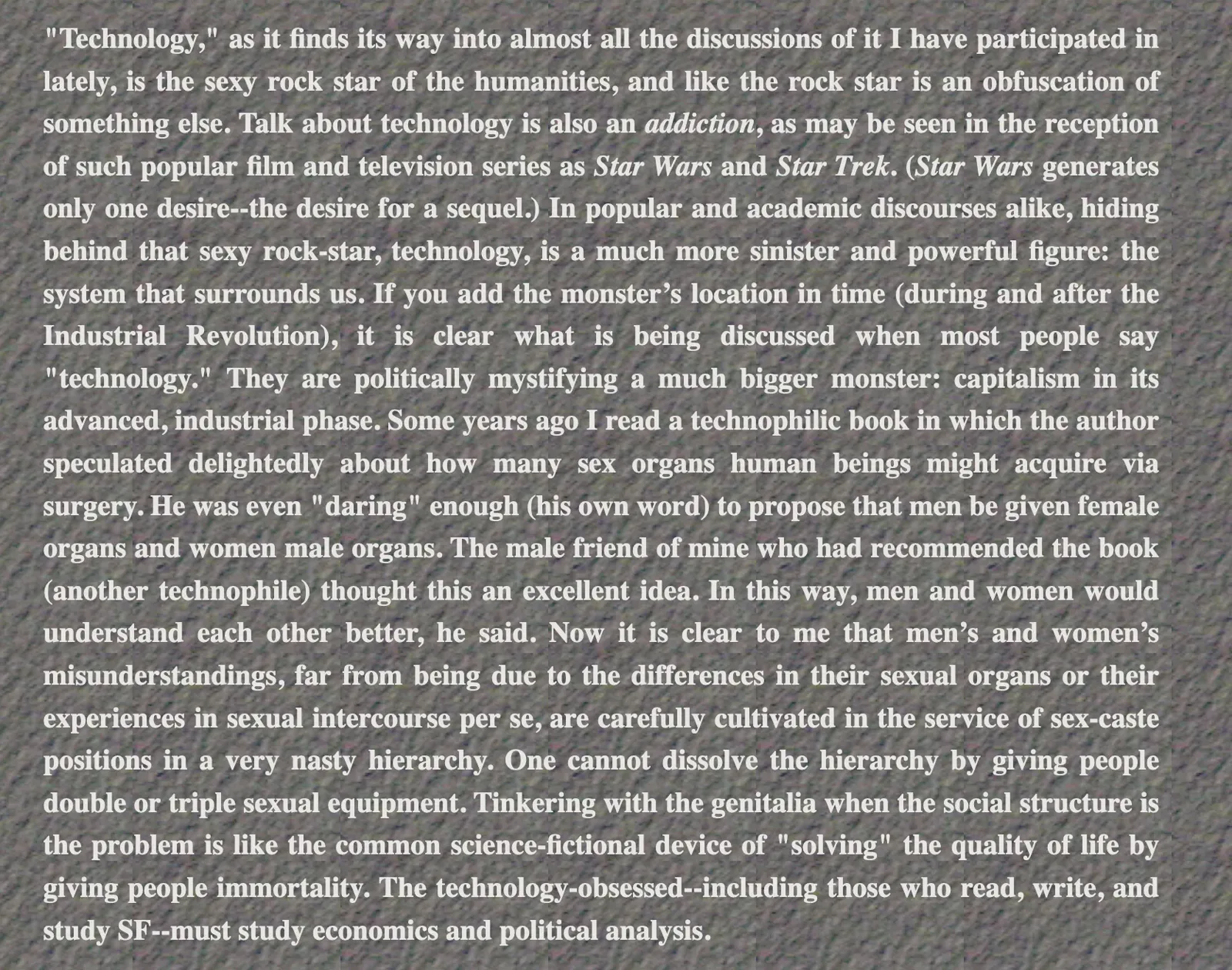
Interestingly, as the digital sublime emerged, feminists like Joanna Russ were early on in recognizing this sublime as (male) addiction and fetishization.
 𝕮@chrisshank.com
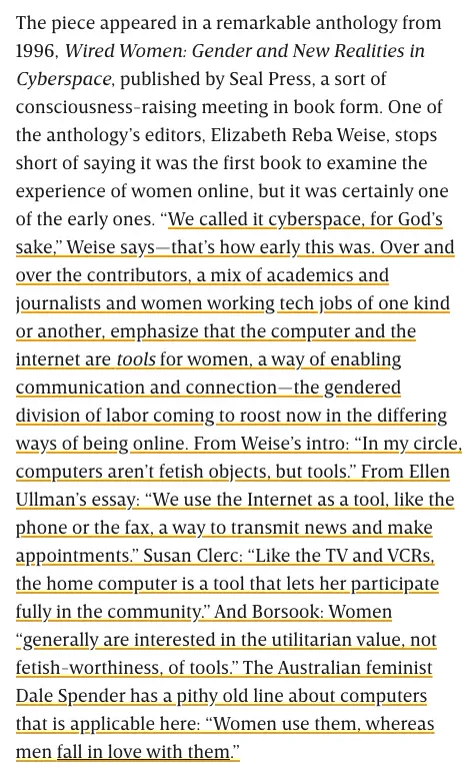
...and also imagine relationships with technologies in a defetishized way – as a normal tool.
 norvid_studies@norvid_studies
fremen (anthropic employees) dune sandwalking but for text input in a way that doesn't trigger the filter (sandworms)
Corinne (🏠 in NYC)@manic_pixie_agi
I wonder if there's something related happening with the aggressive safety filter on claude dot ai where ants (assuming they primarily use that interface and the same models) talk to Claude in a way that usually doesn't trigger the filters the way that other ppl outside the lab do
 Adam Kranz@adam_kranz
running water good, standing water bad
summer@transgendererer
llm-generated text is valuable because interactive. claudespeak copy pasted into a normal text document is like a screenshot of a video game. whole other medium, and ill-suited for it